



Welcome to the latest update to Digichem:
Version 8.1.1
Hi folks, welcome to update 8.1.1. This update is a minor version upgrade which fixes a few outstanding bugs from the 8.0.0 release and introduces some new features for handling (very) large structures in xTB.
Upgrades for xTB
The super-fast xTB computational engine, introduced into Digichem in v8.0, has received a few improvements to better support extra large structures. These include increasing the default stack limit in-line with the amount of requested memory (xTB tends to place an unusually large amount of memory on the stack) and support for the outcore version of std2 with the '-rw' flag. Digichem will now try and guess whether the std2 calculation is likely to fit within memory, and will automatically enable -rw mode if not. Currently, the algorithm just checks the molecular weight of the structure and enables -rw if it exceeds a set limit (currently at 1000 D), but we're looking to add more intelligent algorithms in the future. Outcore vs incore can also be manually set if you want. In addition, a bug that caused xTB parsing to fail if the optional xtbtopo file was missing has been fixed, which is particularly relevant here as this file seems to be absent for very large structure (we're not sure why, this might be a bug in xTB itself). Finally, we've added an option to disable the total electron density cube, which can take a significant amount of time to calculate in xTB for large structures. Together, these changes now mean that Digichem/xTB can support truly massive compounds. As an example of what's now possible, here's a single-point calculation of the M60L60 capsid (MW: > 46,000 D) by Fujita and co-workers (Inomata et al., Chem, 2025, 11, 102555; https://doi.org/10.1016/j.chempr.2025.102555):
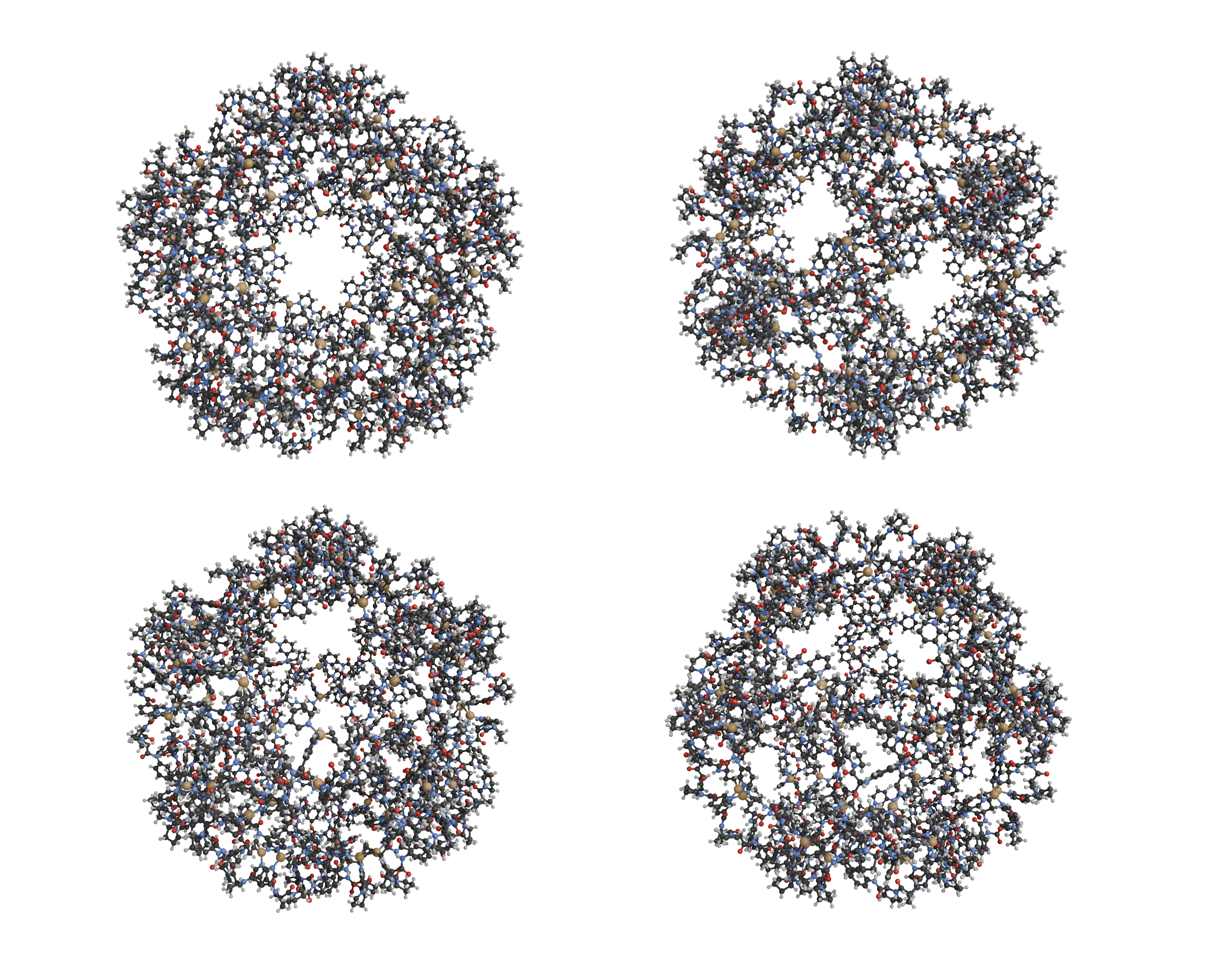
For this demonstration, we decided to leave the total electron density cube turned on, which looks very impressive:
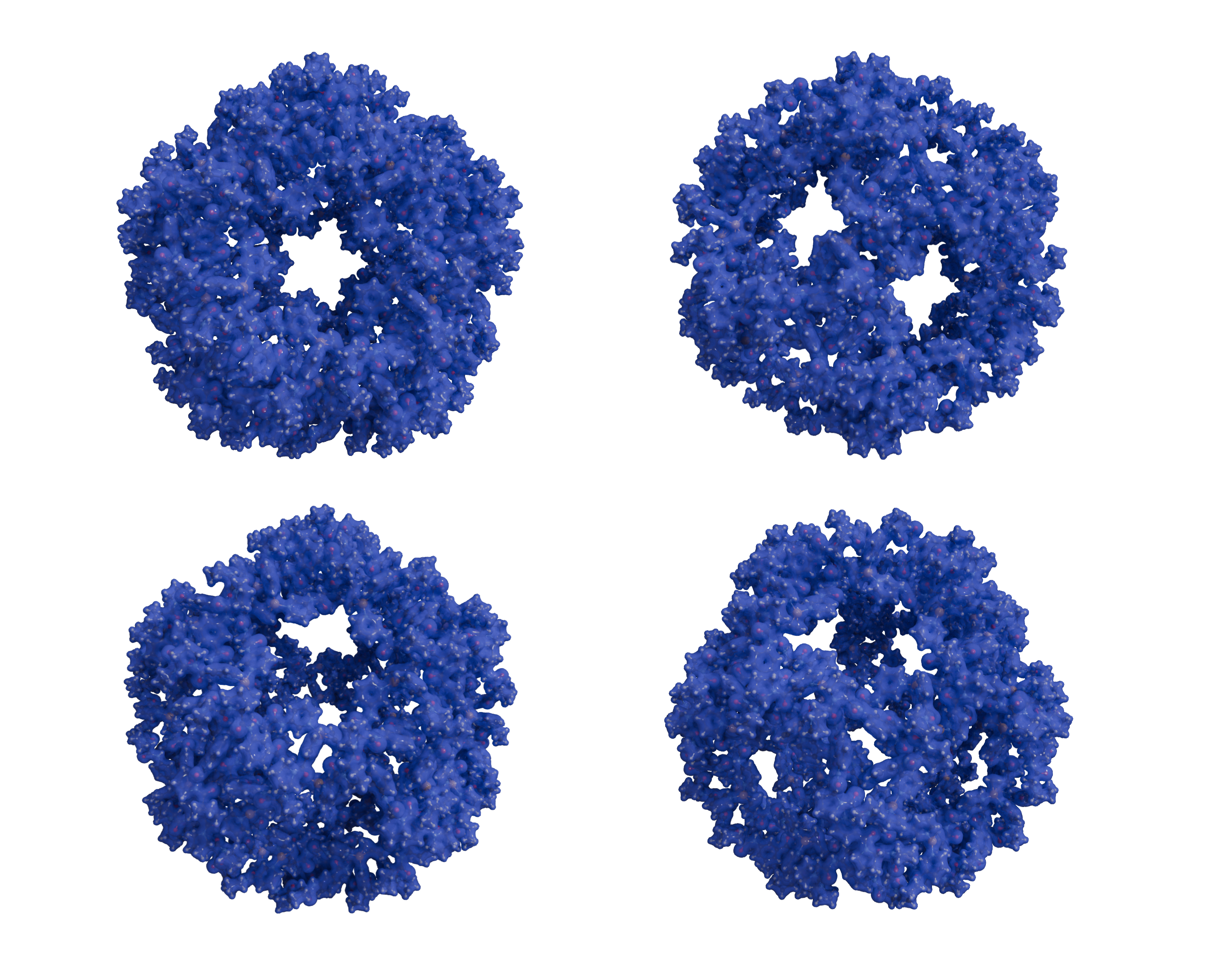
Check out the full results here.
General Improvements
Version 8.1.1 also introduces a few miscellaneous improvements. The spin-component scaled (SCS) and spin-opposite scaled (SOS) versions of the double hybrid ωPBEPP86 functional have been added to the method library, as both versions typically offer better accuracy over the unscaled functional at little to no extra cost. A couple of server endpoints for interacting with methods have been improved. In particular, the method index (part of the unique method code) is now returned along with the method body, which should make it easier to repeat calculations in the future. Finally, a bug when exclusively using basis set exchange (BSE) basis sets, but where no ECP data is available, has been fixed. As always, please check out the full change log for more information.