


Welcome to the latest update to Digichem:
Version 8.0
Greetings traveller, and welcome to the release announcement for Digichem version 8!
Version 8 is a major update to the entire Digichem ecosystem, bringing big changes to Digichem-desktop, the Digichem back end, and the open-source Digichem-library. Headlines include support for a new computational engine (xTB), support for a new method for calculating electronic excited states (sTD-DFT), a new dashboard and drawing application for Digichem-desktop, and the introduction of our own in-house computational server: Digicloud.
Version 8 is available for download right now, simply follow the link below to pick up your copy. Otherwise, please read on to find out all that's new.
Welcome to the cloud
The big headline feature of Digichem 8 is, of course, the introduction of Digicloud; the computational cluster for everyone! Digicloud is a complete high-performance computing (HPC) cluster that is managed directly by us. It is available to everyone, anywhere in the world.

Digicloud heralds a big shift in computational chemistry because it means you no longer need access to your own HPC cluster to start running calculations. For many researchers and scientists looking to get into modelling, this can be a significant hurdle to overcome, either because their institution does not provide a HPC service, or because it is too complicated to use without the prerequisite knowledge and training. Digicloud changes all of that, by providing the entire Digichem experience in a simple, ready-to-use package.
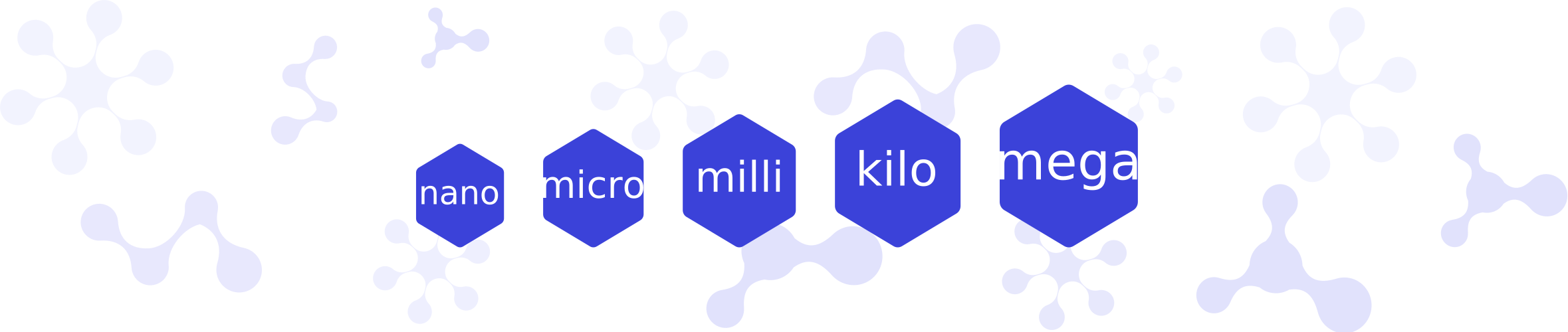
Digicloud currently offers 5 different server types, ranging in size from Nano (4 CPU), Micro (8 CPU), Milli (16 CPU), Kilo (32 CPU), and Mega (64 CPU), depending on the size of the molecules (and the complexity of the computation) being calculated. All users on Digicloud will have a monthly quota of CPU-hours to track their computational usage. The size of this quota, as well as which servers on Digicloud are available, depend on which plan you pick.
Our goal, as ever, is to make computational chemistry accessible for everyone. To that end, we've endeavoured to offer a range of pricing tiers to suit different users needs. Visit out pricing page to find a Digicloud plan that suits you!
A flash new front end
New dashboard screen
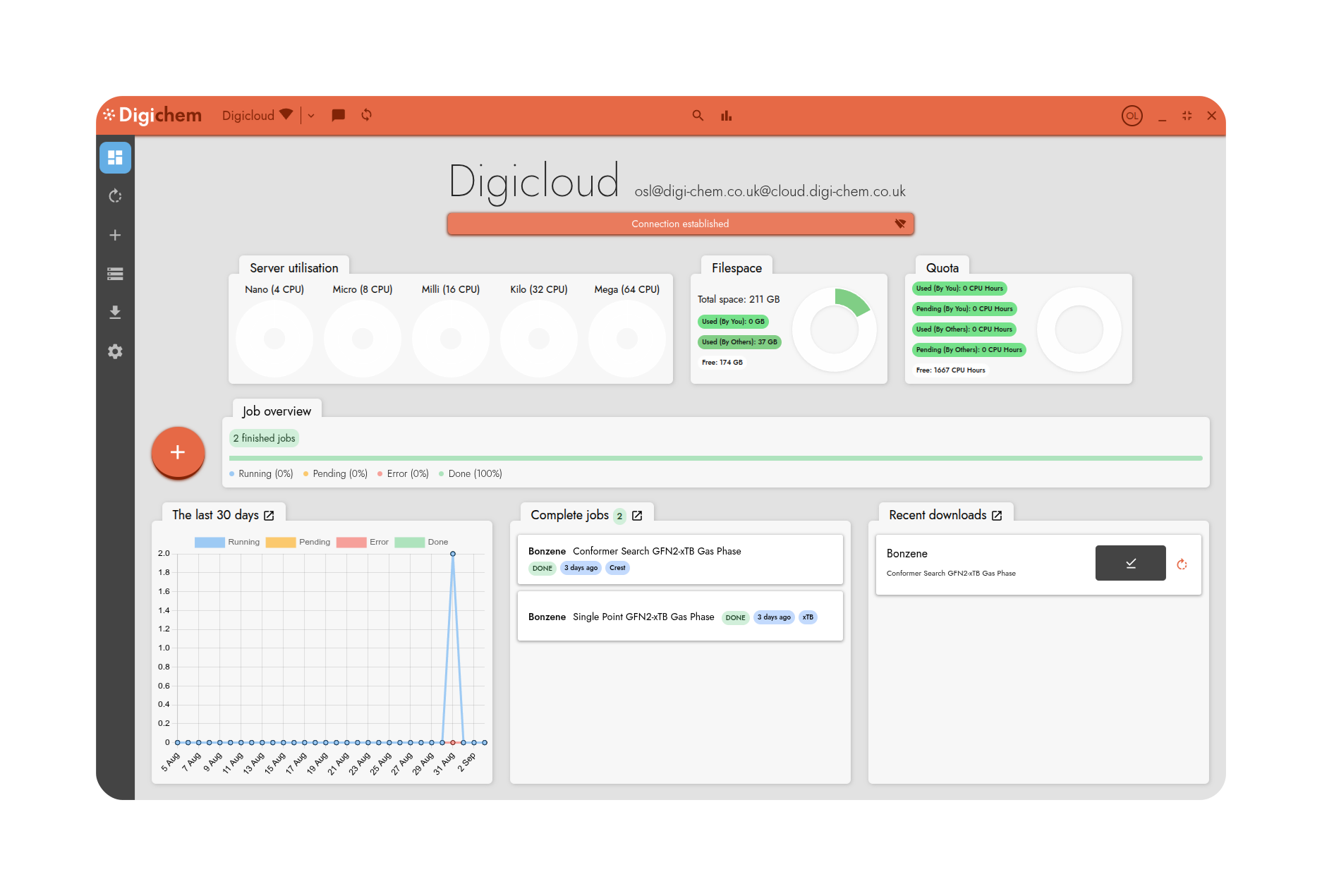
Digichem 8 launches with our new Dashboard screen centre stage. This widget acts as your main command centre when starting the app, giving you a complete breakdown of all of your computational happenings for a particular server. In addition to calculation information, the Dashboard also shows you critical server status at a glance, including queuing information and billing consumption (if applicable to that server).
Show me more
Drawing in the app
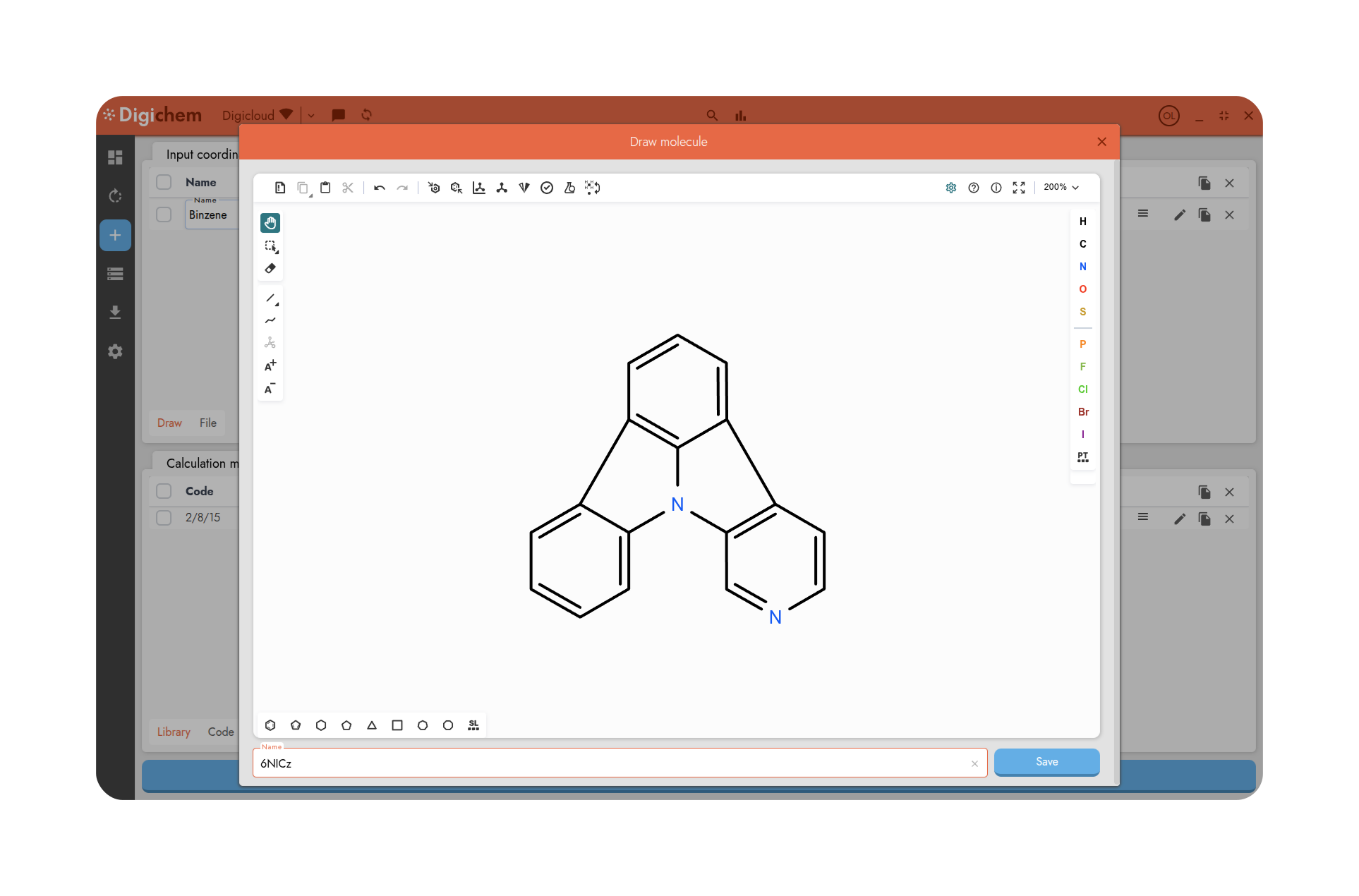
This is something we're very excited to announce. Digichem-desktop now includes a built-in molecular sketcher! Based on the excellent open-source Ketcher project, you can now draw (and edit) 2D structures directly in the app. Ketcher is a fully fledged sketcher coming with all the features you'd expect, including various bonding types, atomic charges (and/or radicals) and a library of aromatic templates to start from.
Show me more
Updated splash screen
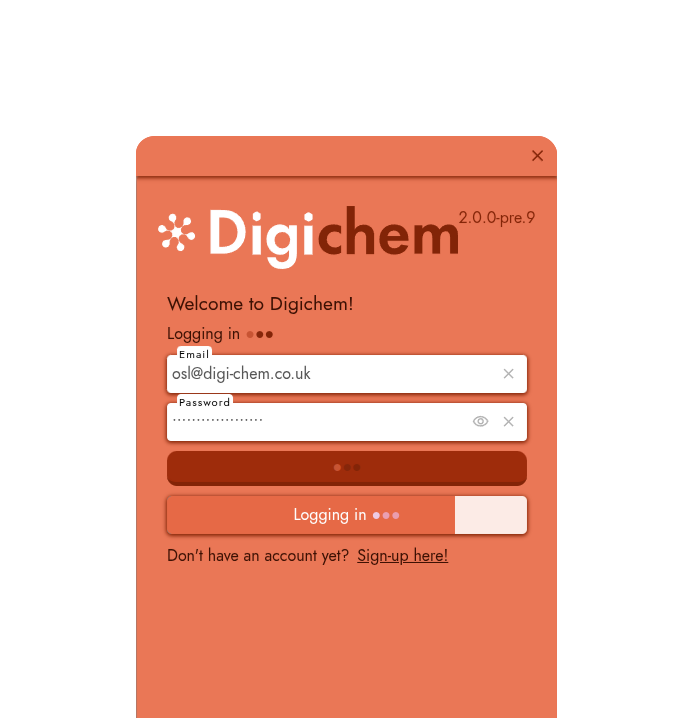
The loading screen shown when the app is starting up has also been overhauled. In addition to more clearly showing server connection information, the splash screen now also supports user login credentials, meaning you can access Digicloud directly from this screen. This change is part of an ongoing process to better streamline the server connection process, and you can expect more changes here in the future!
What is Digicloud?
Powerful updates to the back end
xTB support
Support for the lightning fast calculation engine developed by the Grimme group has now been added. xTB is well known for its rapid geometry optimisations routines, but it can also calculate vibrational frequencies and even electronic excited state energies (more on that below). All of these calculation types have now been added to the Digichem internal method library, providing a wealth of options for rapid compound screening and characterisation.
Find out more about xTBThe xTB logo is copyright Sebastian Ehlert. It is reproduced here under the terms of the CC BY-SA 4.0 license.
sTD-DFT for rapid excited states
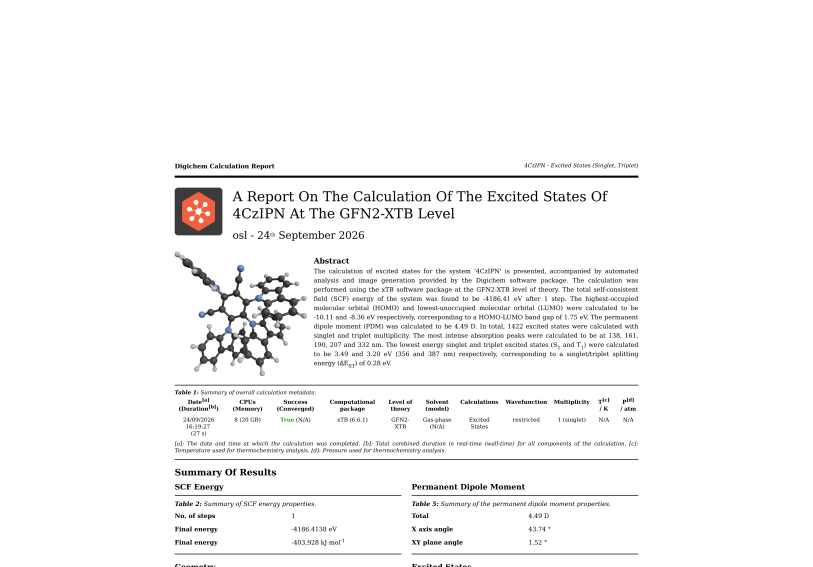
The simplified TD-DFT method (sTD-DFT,) and its even simpler cousin sTDA, have now been added to the method library. sTD-DFT uses the std2 program (also developed by the Grimme group) to calculate electronic excited states several orders of magnitude faster than conventional DFT, while still maintaining excellent accuracy. Two implementations are currently available depending on how the ground state is calculated: (1) using DFT orbitals calculated with PySCF (for better accuracy), or using xTB orbitals (for even greater speed).
Read more about sTD-DFT
New Pre-compiled Binaries
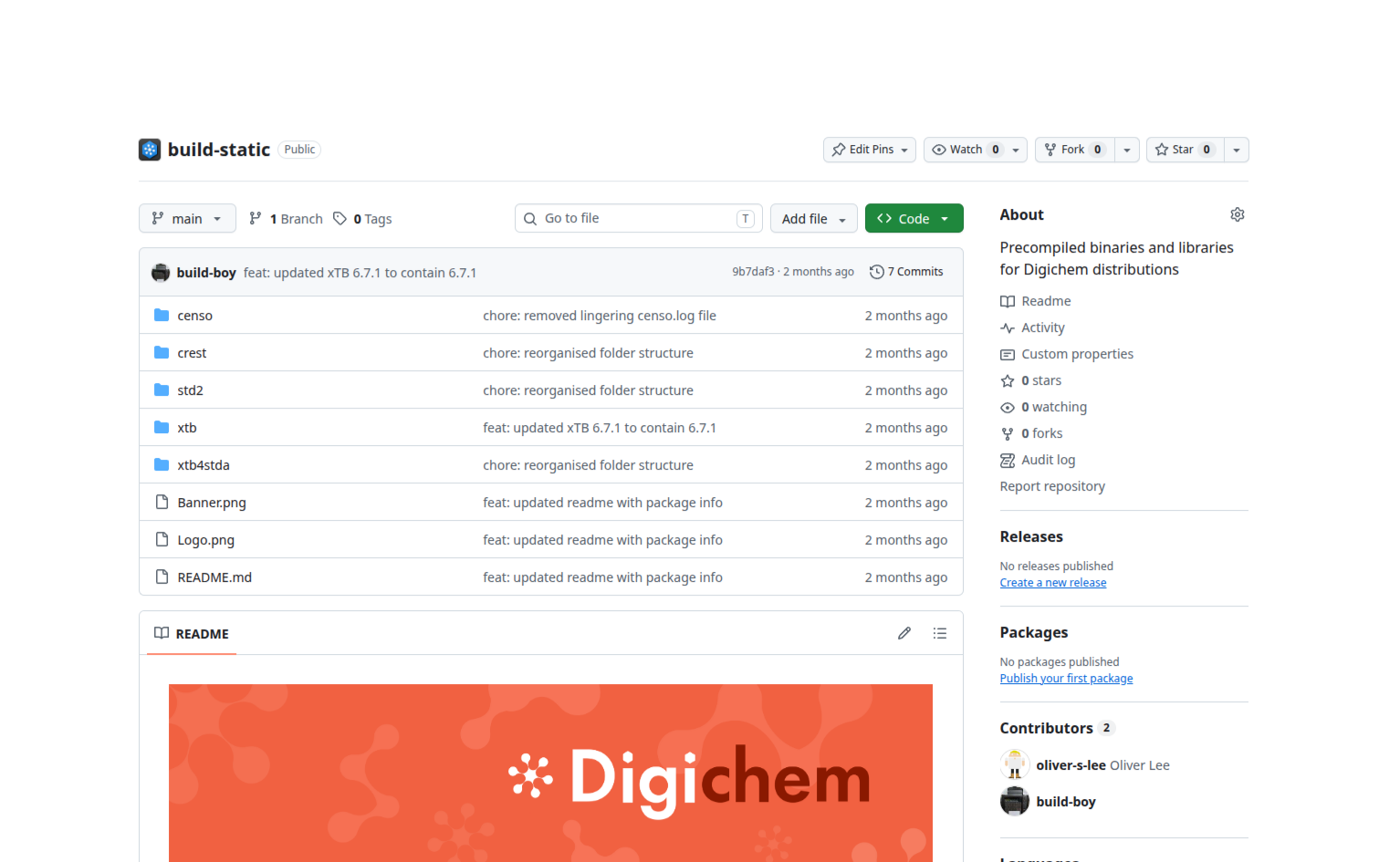
In addition to the CENSO and CREST programs (which were already included in distributions of Digichem 7), the xTB, std2, and xtb4stda programs have now been added to our list of pre-compiled binaries. This means that each of these programs is compiled and bundled alongside each Digichem installation, giving instant access to compound screening and characterisation techniques straight out of the box.
See what's available
General Improvements
In addition to these new features, there have been a plethora of minor changes and improvements to the program. A particular focus has been on connection stability between the Digichem back end and Digichem-desktop, which is much improved in version 8 (particularly for self-host servers which are protected behind SSH tunnels). We've also overhauled the server API to better conform to the JSON:API specification which will greatly help developers looking to access Digichem functionality remotely (full documentation on the Digichem API is in the works, but please get in touch if you need access sooner). In Digichem-desktop, new program versions will now be downloaded automatically in the background, keeping you up-to-date with future developments without having to manually upgrade. Finally, there has, of course, been a mountain of bugfixes and other adjustments to improve your Digichem experience, please check out the full change log for more information.
Well, that's it for now folks! As always, a big thanks from everyone here at Chemicus for making Digichem the success that it is today, and we hope you enjoy using the new program as much as we have enjoyed putting it together.